Key Takeaways:
- Core Value: Layer-2 scaling boosts blockchain speed and lowers costs by processing transactions off-chain while keeping layer-1 security.
- Comprehensive Services: Solutions like rollups, sidechains, and state channels provide numerous methods to scale blockchain networks successfully.
- Business Benefits: Lower gas fees and higher throughput facilitate scalable, low-cost blockchain applications with greater user experience.
- Industry Use Cases: Layer-2 powers DeFi, NFTs, gaming, payments, and enterprise use cases by simplifying quick and affordable transactions.
- Future Trends: Upgrades in ZK rollups and interoperability will urge mass adoption and form the future of web3.
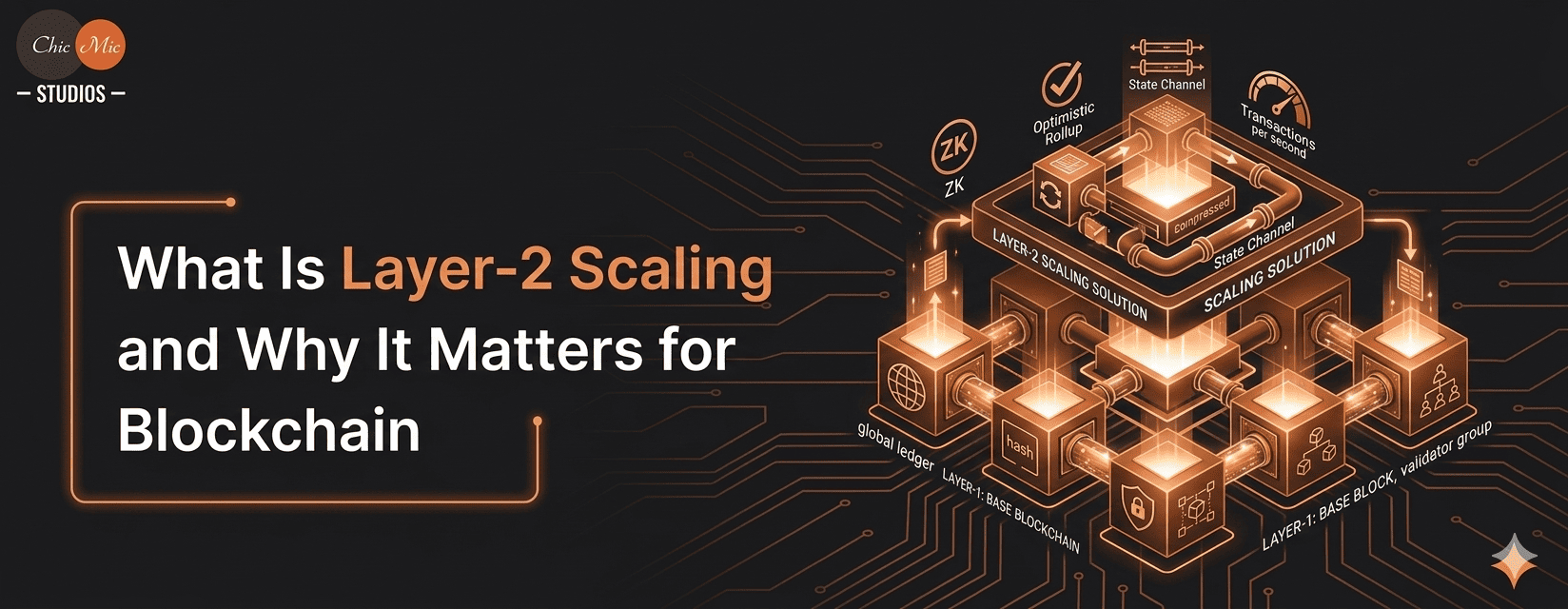
What Is Layer‑2 Scaling in Blockchain
The advancement of blockchain has led to a new era of the internet where users will have greater control over their digital assets, while also benefiting from reliable and efficient technology. Unfortunately, with the increased use of these technologies has come congestion to existing networks, including major ones such as Ethereum. As this congestion continues, the demand for layer 2 scaling solutions has grown. Enterprise adoption is also impacted by scalability limits. According to IBM, over 70% of enterprise blockchain projects cite scalability and performance as primary barriers to production deployment.
Users and developers started asking what is layer 2 scaling in blockchain and why it is becoming a necessity. Essentially, it refers to a group of tools that can process blockchain transactions at a substantially higher volume than those performed directly on the network’s base layer. This allows for a more seamless experience between dApps and the larger blockchain ecosystem. Businesses looking to build scalable decentralized applications can explore services offered by ChicMic Studios through their blockchain app development solutions
This article provides an overview of the mechanics of layer 2 solutions. How they differ from traditional blockchain solutions, their overall benefits, and what types of practical development they may be used for.
What Is Layer‑2 Scaling
Layer 2 Scaling is designed to supplement the existing layer 1 infrastructure of a network without changing its underlying protocol. Rather than processing each transaction via layer 1 (the main chain), layer 2 Networks allow for multiple off-chain. This allows the transactions to be aggregated into a singular proof, providing a summary for the layer 1 network to update its state. According to Forbes, Layer 2 networks now secure approximately $36 billion in decentralized applications.
For instance, if 1,000 transactions were processed through a given layer 2 network, only one proof would need to be submitted to Ethereum as opposed to submitting all 1,000. This has multiple implications from an operational standpoint. For one, it reduces congestion on a network and thus reduces the overall cost of successfully transacting. Secondly, it still retains all the blockchain’s qualities inherent to a layer 1 network, such as security and immutability.
This characteristic is at the core of the development of blockchain and the future of layer 2 in web3. It provides a means for developers to create applications with complex transaction processing needs. They can be Decentralized Exchange (DEXs), Non-Fungible Token (NFT) marketplaces, and low-latency gaming. Yet, ultimately pave the way for widespread use of the Web3 ecosystem.
Why Blockchain Needs Scaling
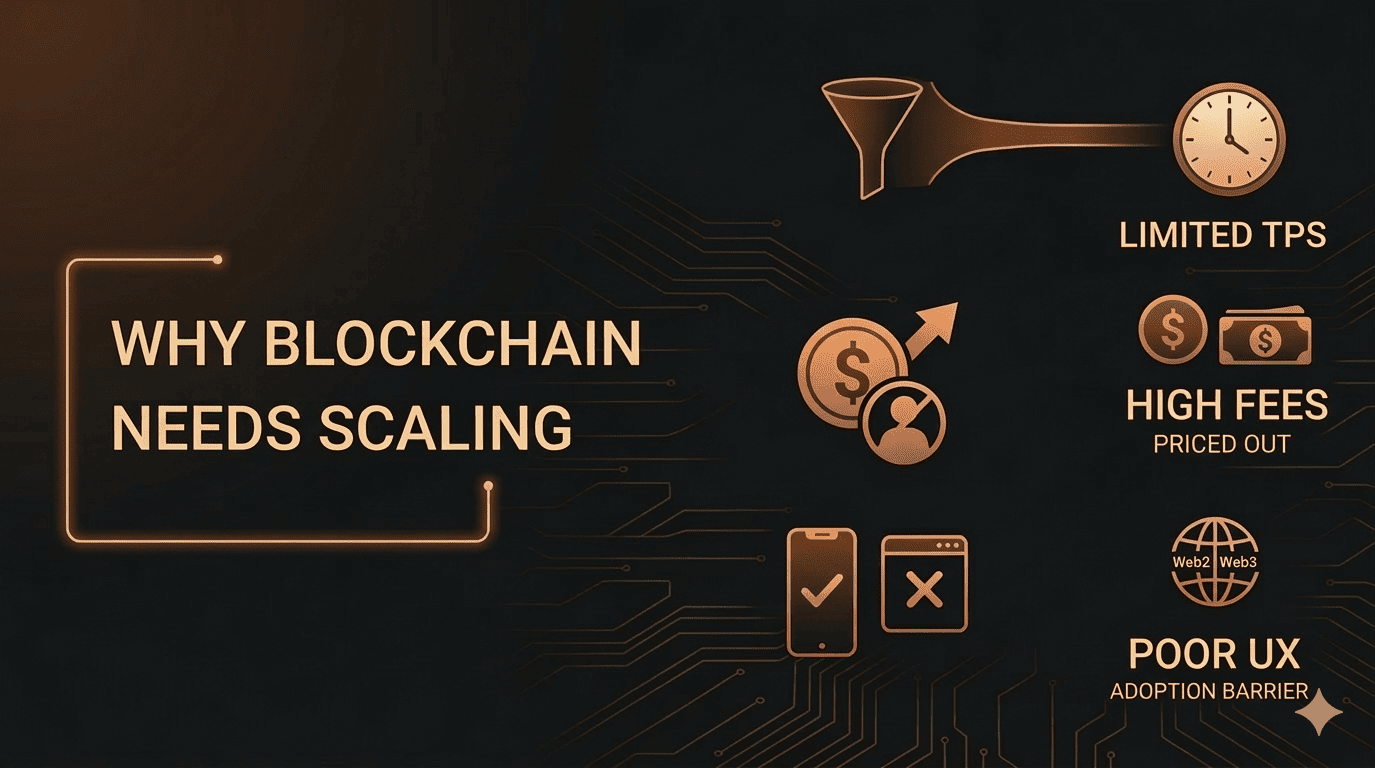
The ability of blockchains to expand up to accommodate larger ecosystems is essential. The following are reasons why scalable blockchain solutions are necessary:
1. Limited Throughput
The capacity of many blockchains is limited (constrained) by the number of transactions (per second) throughput. For example, on average, Ethereum handles approximately 15 Transactions Per Second (TPS). While a visa handles an average of approximately 24,000 TPS. This lack of throughput results in slow transaction confirmation times and therefore large delays & congestion during periods of peak activity.
2. High Gas Fees
Gas fees are the costs associated with tx on the blockchain network. When the Tx network is working at peak performance, the gas fees increase substantially. For some casual users, they will pay $50 for the ability to send a tx that may be only $0.05. This creates a restraint for casual users as well as a limitation on “the” actual use cases of decentralized applications.
3. User Experience Barriers
Slow transactions, excessive gas fees, and the unpredictability of gas fees limit the ability of blockchain to compete with traditional web2 platforms when providing services. Users expect the same (or better) speed and fees when using deFi, gaming, or social platforms. To meet these expectations, companies often rely on expert partners like ChicMic Studios for custom blockchain development that focuses on performance and scalability. It is highly unlikely that the users of these applications will become a significant part of the user base without adequate scaling support.
Types of Layer‑2 Solutions
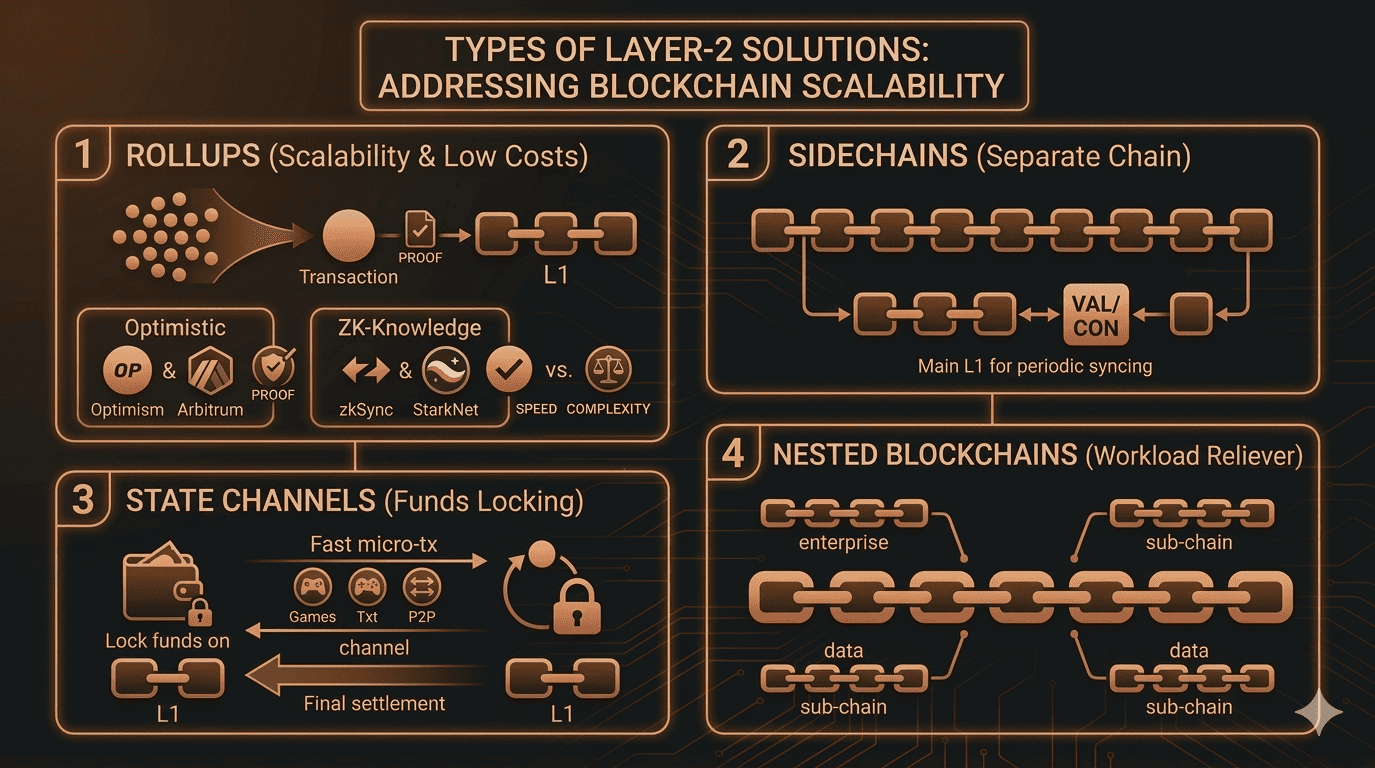
While there are many different types of layer-2 solutions, two main examples exist which may be used to address the scalability & cost issue of blockchain.
1. Rollups
Rollups are designed to improve scalability and lower costs of layer-1 chain implementations. They provide one of the most scalable solutions to large-volume (Tx) networks by combining a large number (many) of small off-chain transactions. They combine this into one larger transaction and then demonstrate “proof” of the validity of the incoming transactions on layer-1. According to the Ethereum Foundation, rollups explained in detail are one of the most effective Layer-2 scaling techniques for reducing costs and increasing transaction throughput.
- Optimistic Rollups: Assumes all transactions are valid by default; only if there is a dispute, may it be resolved through the use of an “anti-fraud” proof method. (i.e., Optimism & Arbitrum)
- ZK (Zero-Knowledge) Rollups: It requires proof that a transaction is verified before posting on Layer-1. (i.e., zkSync & StarkNet)
The debate of zk rollups vs optimistic rollups comparison often centers on speed, security, and computational costs. ZK rollups are generally faster in verification, while optimistic rollups are easier to implement for complex smart contracts.
Discussions of the advantages of zk rollups vs optimistic rollups comparison revolve around the areas of speed, security, & computational cost. Typically, zK rollups are much more efficient with respect to verification (i.e., speed). While optimistic rollups are much easier (cheaper) to implement with more complicated smart contracts.
2. Sidechains
A sidechain is a separate, independent blockchain that runs alongside the main chain. It allows for separate transaction processing and periodic syncing with layer 1. Sidechains allow for a larger number of transactions at once compared to the main chain. However, they are typically reliant on their own validators and consensus methods to complete transactions, which could create new security risks. Sidechains operate independently with their own consensus mechanisms, which can introduce different security trade-offs. To better understand their structure and real-world applications, you can refer to this explanation of what are blockchain sidechains.
3. State Channels
State channels allow participants to lock funds on the main chain while conducting numerous off-chain transactions. At the end of the off-chain transaction process, the final result is inserted back into the main chain. State channels are suitable for processing micro-transactions, games and peer-to-peer payments.
4. Nested Blockchains
Nested blockchains are blockchains that assign certain tasks to chains subordinate to the main chain so that the main chain can relieve itself of workload. This model is beneficial for enterprise use cases with high transaction volumes and speed requirements.
Rollups vs Sidechains Explained
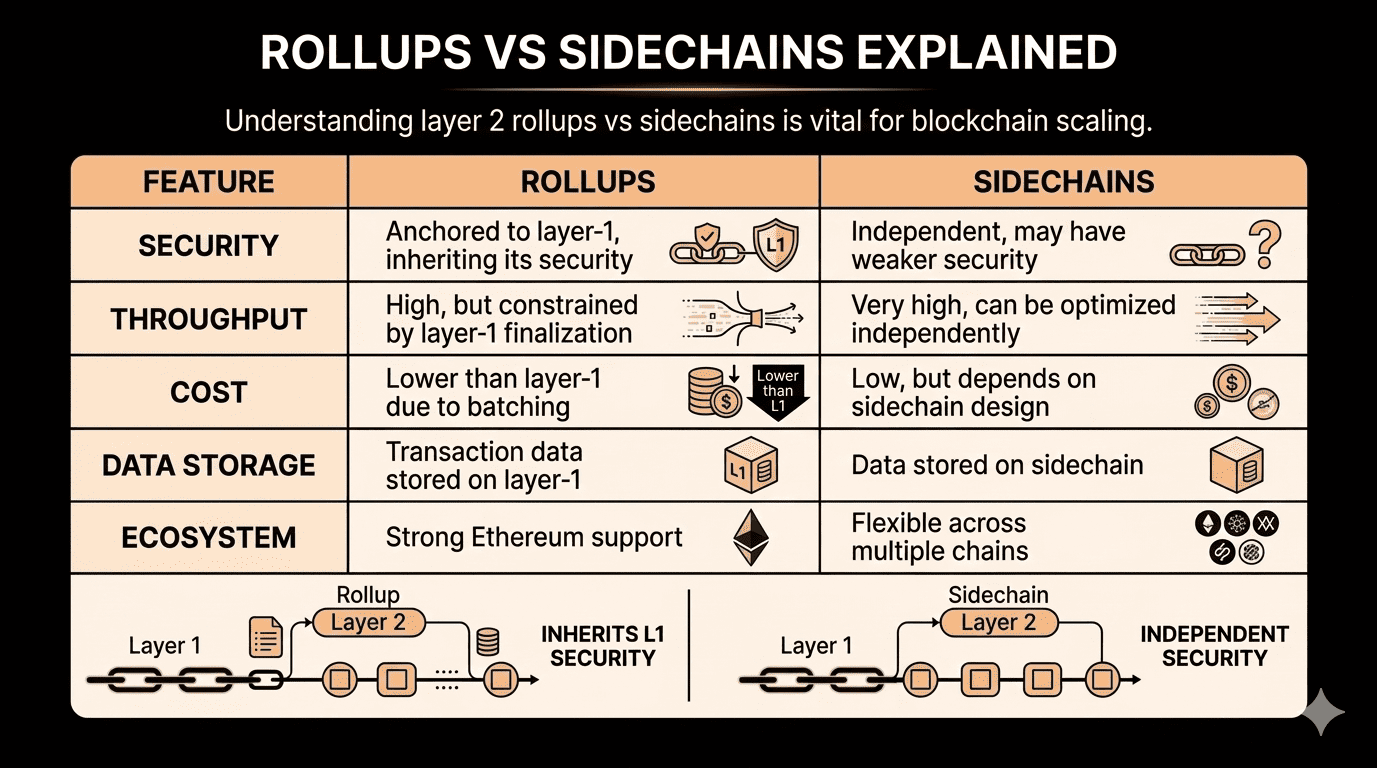
Understanding layer 2 rollups vs sidechains explained is vital for anyone exploring blockchain scaling:
| Feature |
Rollups |
Sidechains |
| Security |
Anchored to layer-1, inheriting its security |
Independent, may have weaker security |
| Throughput |
High, but constrained by layer-1 finalization |
Very high, can be optimized independently |
| Cost |
Lower than layer-1 due to batching |
Low, but depends on sidechain design |
| Data Storage |
Transaction data stored on layer-1 |
Data stored on sidechain |
| Ecosystem |
Strong Ethereum support |
Flexible across multiple chains |
Key Takeaway: Rollups offer security with moderate scalability improvements, while sidechains maximize speed but may trade off security.
How Layer-2 Networks Reduce Gas Fees
Layer 2 networks help to reduce gas fees by grouping multiple transactions together. As explained by the Ethereum Foundation, what are gas fees depends on network demand and computational complexity.
It also assists them to process them as one transaction so users can share in the cost rather than each transaction having a high individual gas fee. Additionally, layer 2 networks often perform most of their computational workload off-chain. This means that instead of several transactions being processed in the main blockchain and difficulty increasing with more transactions being processed. The only thing that needs to be processed in the main blockchain is the end result. This leads to a much lower load on the main blockchain and quicker and cheaper transactions.
Layer 2 solutions also reduce the amount of data stored on the blockchain by only saving relevant information for each transaction (e.g. proof of transaction and/or a small summary), rather than saving all transactional data for every transaction. This results in less storage space needed on the blockchain. This lowers the overall gas fee for say a transaction that may cost approximately $30 on Ethereum at peak times to process, down to less than $1 to process using layer 2 solutions.
Benefits of Layer‑2 Networks
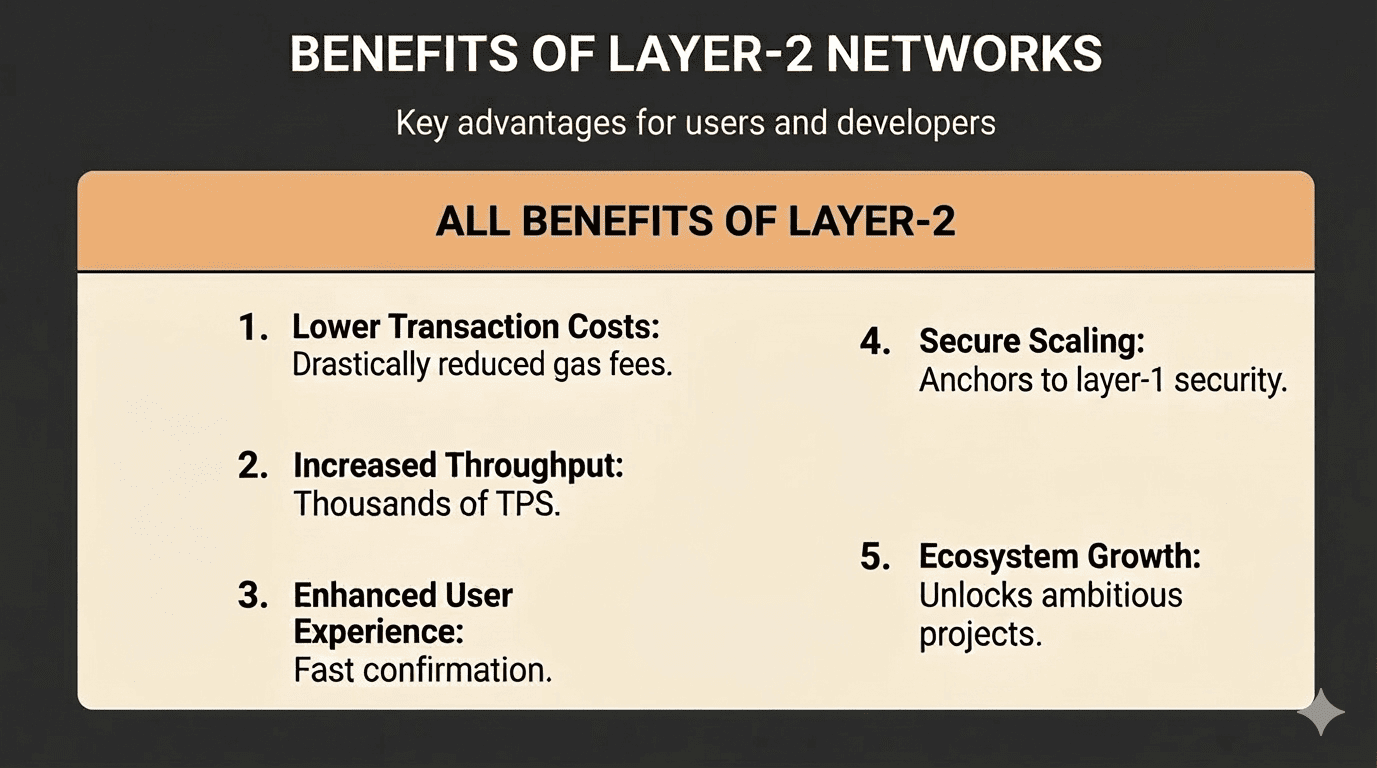
1. Lower Transaction Costs
Layer‑2 networks drastically cut gas fees, making small transactions viable for users and dApps.
2. Increased Throughput
With thousands of TPS possible, layer‑2 allows real-time financial applications, gaming interactions, and NFT trades.
3. Enhanced User Experience
Faster confirmation times and fewer failed transactions improve usability, encouraging mainstream adoption.
4. Secure Scaling
Solutions like rollups anchor back to layer‑1, maintaining decentralization and security while scaling.
5. Ecosystem Growth
Developers can deploy ambitious projects without worrying about prohibitive costs or network congestion. DeFi, NFT marketplaces, and metaverse applications benefit from scalable infrastructures
Real‑World Layer‑2 Use Cases
1. DeFi Platforms
Popular decentralized exchanges like Uniswap use layer‑2 to reduce gas fees and support high-frequency trading.
2.NFT Marketplaces
Marketplaces like OpenSea and Immutable X leverage layer‑2 to facilitate cheaper minting, trading, and microtransactions for NFTs.
3. Cross-Border Payments
Layer‑2 networks make cryptocurrency remittances faster and cheaper, challenging traditional banking fees.
4.Gaming & Metaverse
High-speed transactions enable in-game economies, NFT asset trading, and interactive virtual worlds.
5. Enterprise Solutions
Companies use layer‑2 to optimize supply chains, identity verification, and financial transactions without overloading layer‑1.
These use cases highlight the growing demand for scalable solutions, which businesses can implement with the help of ChicMic Studios’s blockchain development services.
Challenges of Layer-2 Scaling
Layer-2 solutions can offer a lot of scalability benefits but also present some significant challenges. One challenge is the increased complexity of moving assets back and forth between layer-1 and layer-2 networks that can confuse users. Another challenge is interoperability since each layer-2 scaling solution operates independently of other layer-2 scaling solutions. Therefore, they do not always work together to create a fragmented ecosystem.
There are also new security concerns as sidechains may have fewer validators than layer-1 or layer-2 networks and will ultimately depend on a smaller number of validators for security. In some instances, early layer-2 scaling solutions may operate utilizing centralized components, which poses a risk in regards to decentralization.
These challenges highlight the trade-offs between scalability, security, and decentralization, as well as the risk of ecosystem fragmentation, as discussed in this overview of blockchain scalability challenges and trade-offs by Consensys.
Additionally, there is a need for additional development effort to adopt layer-2, which makes it more difficult to acquire by some projects.
Future of Layer‑2 in Web3
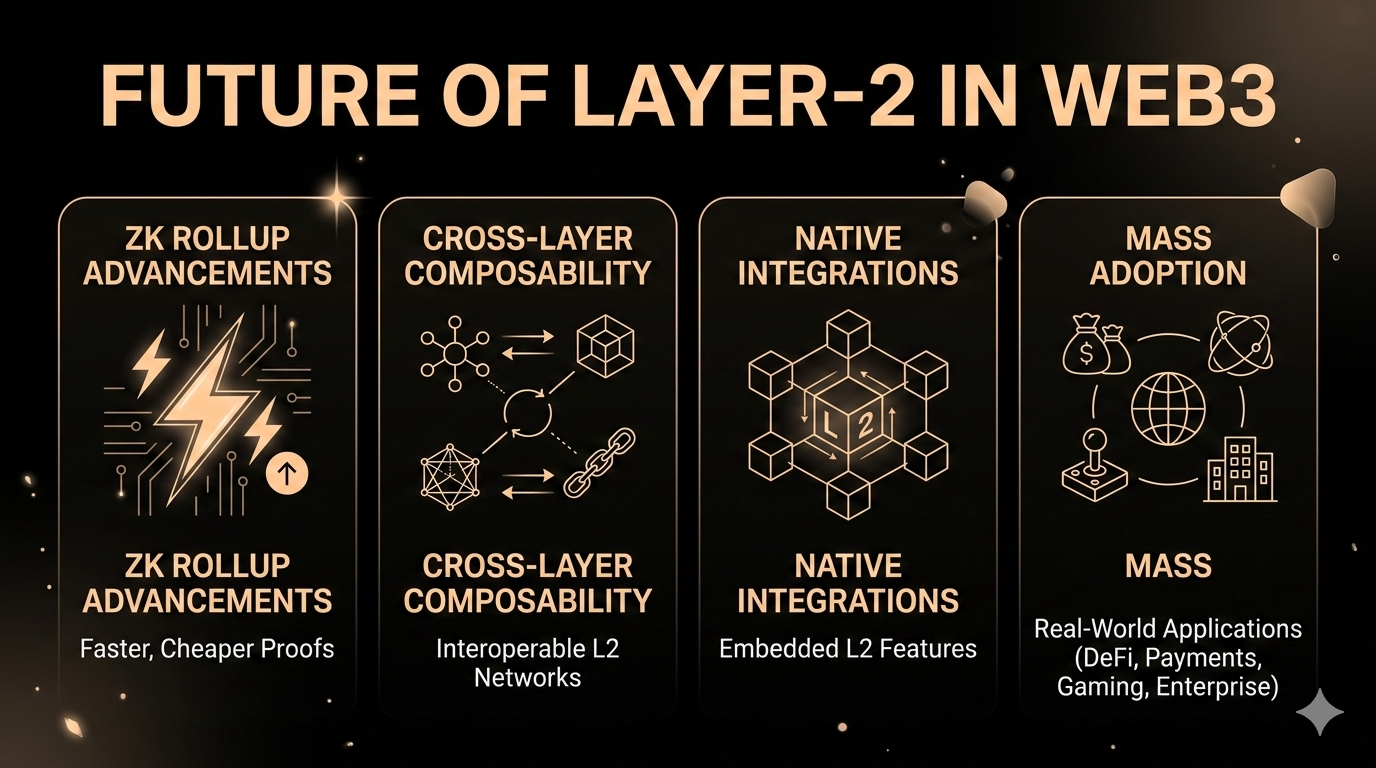
The next generation of Web3 relies heavily on layer‑2:
- ZK Rollup Advancements: Faster, cheaper proofs will make ZK rollups the dominant scaling solution.
- Cross-Layer Composability: Interoperable layer‑2 networks will allow assets and contracts to move seamlessly.
- Native Integrations: Future blockchains may embed layer‑2 features into their core, reducing reliance on external solutions.
- Mass Adoption: Lower costs and higher throughput will enable real-world applications like decentralized finance, global payments, gaming economies, and enterprise-grade blockchain solutions.
Conclusion
For those people involved in the blockchain space, understanding what is layer 2 scaling in blockchain is vital. Layer‐2 solutions can resolve the main bottlenecks of decentralized applications including throughput, transaction costs, and user experience. This will help to make these decentralized applications practical and scalable. From rollups to sidechains, each of these new technologies is already influencing the future of web3 and will be utilized for driving mass adoption of blockchain technology. To explore how businesses can practically implement these technologies. Businesses aiming to build scalable Web3 applications can leverage the expertise of ChicMic Studios to develop high-performance blockchain solutions tailored for real-world use.
The use of layer‐2 solutions by developers, companies, and users will help them access significantly better blockchain technologies. It is performed by faster transaction speeds and lower costs. It provides better security for the transactions processed on them, ensuring that the real potential of decentralized technologies is fully achieved.
Frequently Asked Questions
1. What is layer-2 scaling in blockchain?
Layer-2 scaling solutions increase transaction speed and decrease cost by using various technologies on top of existing blockchain networks (e.g., Ethereum). These solutions complete their transactions off-chain but still maintain security by utilizing the underlying source chain.
2. Why does Ethereum need layer-2 solutions?
When demand for Ethereum exceeds available resources, the network experiences congestion, resulting in slow transaction speeds and high gas fees. By implementing layer 2 scaling solutions, Ethereum reduces demand placed on its host chain and allows for faster processing of more affordable transactions.
3. What are rollups in blockchain?
Rollups are a common type of layer 2 scaling solution that combines multiple transactions into one single transaction to be sent to the main chain. The combined transactions increase scalability while retaining security. There are two main types of roll ups: Optimistic and ZK-Rollups.
4. How do layer-2 networks reduce gas fees?
Layer-2 networks save money on gas fees by batching multiple transactions, processing them off-chain, and only storing the necessary data/tokens for them to execute on the main chain. This reduces the overall number of transactions using the main chain and enables multiple users to share costs, resulting in cheaper transactions.
5. What are the benefits of layer-2 scaling for users?
Layer-2 scaling provides upgrades to transaction speeds, lower fees, and better access. It forms blockchain applications more functional for everyday use, along with payments, gaming, and decentralized finance (DeFi).